Global Slot Certification Standards Drive Changes in Responsible Gambling Features, Mobile Payments, and VIP Access
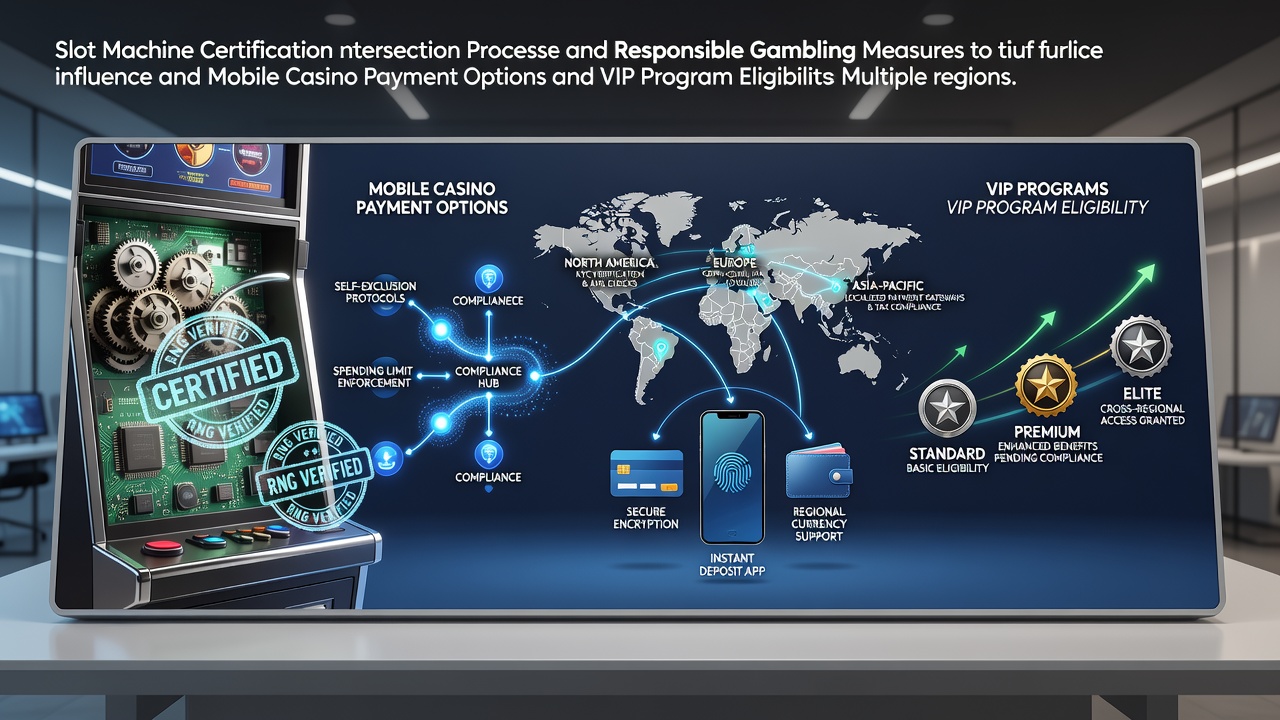
Slot machine certification processes require independent laboratories to verify hardware integrity, software fairness, and compliance with regional technical standards before any device reaches market deployment. These evaluations now incorporate responsible gambling modules that track session duration, wager patterns, and loss limits, creating direct linkages to how operators structure mobile payment flows and determine VIP program access in multiple jurisdictions.
Certification Requirements Across Key Markets
Regulatory bodies in Nevada, New Jersey, and other US states mandate that certified slots include real-time reporting interfaces capable of feeding data into centralized responsible gambling databases, and similar protocols appear in Malta and Australian frameworks where testing houses examine RNG outputs alongside player protection algorithms. Observers note that June 2026 brings scheduled updates to several testing standards, particularly those addressing mobile platform integration and cross-border data sharing for high-volume players.
Certification bodies evaluate whether games can enforce mandatory cooling-off periods or deposit caps without disrupting core gameplay loops, and this capability directly affects which payment processors operators select for their mobile applications. Research indicates that systems passing these integrated checks often require payment gateways supporting instant verification of spending thresholds, which narrows options to providers already equipped with such features.
Impact on Mobile Casino Payment Options
Mobile operators must align their deposit and withdrawal methods with certified game requirements, meaning payment solutions lacking built-in limit-setting tools face exclusion from platforms operating under strict certification regimes. Data shows that regions with unified certification and responsible gambling rules, such as certain Canadian provinces, see higher adoption of e-wallets and prepaid cards that transmit limit data automatically to backend systems.
Payment speed variations emerge because certified environments demand transaction logging that feeds into player behavior monitoring, and slower methods sometimes receive preference when they allow additional verification steps before funds reach the game interface. Those who've studied transaction patterns across platforms report that operators adjust their supported payment lists quarterly to maintain compliance after certification renewals.
VIP Program Eligibility and Certification Ties
VIP qualification criteria frequently incorporate metrics derived from certified slot data streams, including average session length and adherence to voluntary deposit limits, which means players who trigger responsible gambling flags may experience delayed or restricted access to elite tiers. Industry reports reveal that operators in Australia and parts of Europe now calculate loyalty points only from activity that stays within certified responsible parameters, effectively linking certification outputs to reward structures.

Eligibility algorithms pull from the same databases used during certification audits, so a player exceeding preset thresholds on certified titles might see their VIP status paused until a review period completes. Figures from regulatory filings indicate this approach appears more frequently in markets where slot approvals explicitly require responsible gambling data exports.
Regional Variations and Emerging Patterns
European jurisdictions following Malta Gaming Authority guidelines tend to emphasize payment method certification that includes responsible gambling APIs, whereas North American approaches focus more on post-certification monitoring that influences VIP point accrual rates. Academic studies from institutions examining global gaming networks show that convergence between these models accelerates as operators expand mobile offerings across borders.
One analysis of certification outcomes found that titles incorporating both fairness verification and responsible gambling hooks receive faster approvals in multiple regions, which in turn speeds up the rollout of compatible mobile payment systems. Observers note that VIP programs in these environments often publish eligibility rules that explicitly reference certified game data, creating transparency around how responsible play metrics affect tier advancement.
Conclusion
Slot machine certification continues evolving to embed responsible gambling capabilities that reshape available mobile payment choices and redefine VIP eligibility calculations across diverse regulatory landscapes, and upcoming 2026 standard revisions will likely extend these interconnections further as mobile platforms grow. According to information published by the Malta Gaming Authority, integrated testing protocols already demonstrate measurable effects on operator payment selections, while data compiled by the New Jersey Division of Gaming Enforcement illustrates corresponding shifts in how loyalty programs evaluate player activity.